




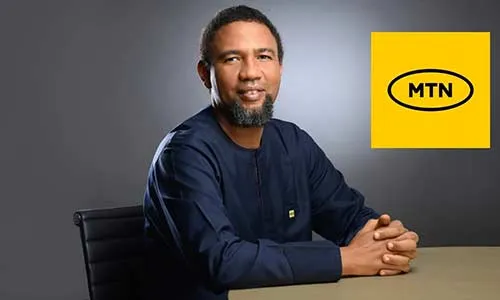
The debate over internet affordability in Nigeria has intensified after the Chief Executive Officer of MTN Nigeria, Karl Toriola, stated that truly unlimited mobile data does not exist anywhere in the world.
Speaking during MTN Nigeria’s “Data on Trial” stakeholder engagement held in Lagos, Toriola addressed growing public concerns about increasing data expenses, network performance, and complaints from subscribers who claim their data bundles are being exhausted faster than expected.
His comments come at a time when many Nigerians are questioning the value they receive from mobile data subscriptions. Across social media platforms, users have repeatedly expressed frustration over what they describe as rising costs and shrinking data value amid increasing dependence on internet connectivity for work, education, communication, and entertainment.
According to Toriola, mobile telecommunications networks operate within capacity limits, making the concept of unrestricted internet usage difficult to achieve on mobile infrastructure.
“There is nowhere in the world where there is unlimited data,” he said.
The MTN boss explained that mobile networks rely on finite resources that must be shared among millions of subscribers. As a result, operators are required to manage network capacity carefully to ensure service quality for all users.
Toriola noted that many consumers underestimate how much data modern digital activities consume. He pointed to the increasing use of high-definition video streaming, automatic application updates, cloud storage synchronisation, and video-heavy social media platforms as major contributors to higher data usage.
According to him, many smartphones and applications continue to consume data in the background even when users are not actively browsing. Features such as automatic backups, app refreshes, software downloads, and autoplay videos can significantly increase overall data consumption without users immediately noticing.
The MTN chief also defended Nigeria’s mobile internet pricing, arguing that data services in the country remain among the most affordable in comparison with several other markets across Africa and beyond.
He urged subscribers to compare local data prices with those in other countries before concluding that Nigerian telecom operators are charging excessive rates.
Addressing concerns surrounding international “unlimited” internet plans, Toriola explained that many of those packages often include limitations that are not immediately obvious to consumers. These restrictions are commonly outlined in fair usage policies, which may reduce connection speeds or impose network management measures after subscribers reach specific usage thresholds.
Industry experts have long noted that such policies are frequently used by telecommunications providers worldwide to prevent excessive network congestion and maintain service quality for a broader customer base.
Toriola further stated that genuine unlimited internet access is more achievable through fixed broadband services, particularly fibre-optic connections, which generally offer significantly greater capacity than mobile networks.
Also Read: The “African Apple”? Why Femi Otedola sold his Geregu stock to bet $100M on Dangote’s September IPO
The remarks have generated mixed reactions among Nigerians. While some agree that changing internet habits and increased video consumption play a major role in data depletion, others believe telecom operators should provide greater transparency regarding data usage and offer more competitive pricing structures.
As internet access becomes increasingly essential for daily life, discussions surrounding affordability, transparency, and the future of unlimited mobile data are expected to remain at the centre of conversations between subscribers, telecom providers, and regulators.
For millions of Nigerians who rely on mobile internet every day, the debate highlights a growing demand for affordable and reliable connectivity in an increasingly digital economy.
