



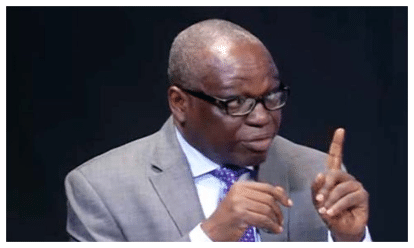
Osaze-Uzzi Demands INEC Explanation Over 1.5 Million Questionable Voter Records
Former Independent National Electoral Commission (INEC) official Oluwole Osaze-Uzzi has questioned how 1.5 million questionable voter records entered the commission’s database.
Osaze-Uzzi, a former Director of Voter and Publicity Education at INEC, said the development raises serious concerns about the commission’s voter registration process.
Speaking during an interview on Arise Television, he argued that INEC’s existing technology should prevent multiple registrations and other irregularities.
He also noted that Nigeria’s electoral laws clearly state who qualifies to register as a voter. According to him, applicants must be Nigerian citizens aged 18 and above.
“The law is quite clear about who is entitled to be on the register: you’re a Nigerian citizen, you’re 18 years and above, and then you go there, and you register. It’s as simple as that,” he said.
Osaze-Uzzi questions INEC’s registration safeguards
Osaze-Uzzi also expressed concern over how the questionable records passed through the commission’s registration safeguards.
He pointed out that voter registration requires applicants to appear physically for the process. It also involves biometric data capture, which should help identify and prevent duplicate registrations.
Also Read: Cristiano Ronaldo Retires from International Football at 41
He therefore questioned how as many as 1.5 million questionable entries could have made their way into the voter register.
“You’ve heard of AI. You’ve heard of multiple registrants. That ought not to be with things that have been put in place by the commission,” he added.
INEC urged to explain questionable voter records
The former INEC director said the commission had yet to provide clear details about the database review.
In particular, he questioned the period covered by the review and how officials first identified the questionable entries.
He acknowledged that technologies such as the Automated Fingerprint Identification System (AFIS) and artificial intelligence can help detect duplicate records and other registration irregularities.
However, he stressed that INEC must explain how the questionable records entered its database despite the safeguards already in place.
His comments add to calls for greater transparency in the management of Nigeria’s voter register, particularly as public confidence in the electoral process remains important.
INEC is expected to provide further clarification on the findings and explain the steps being taken to address the identified records.
