



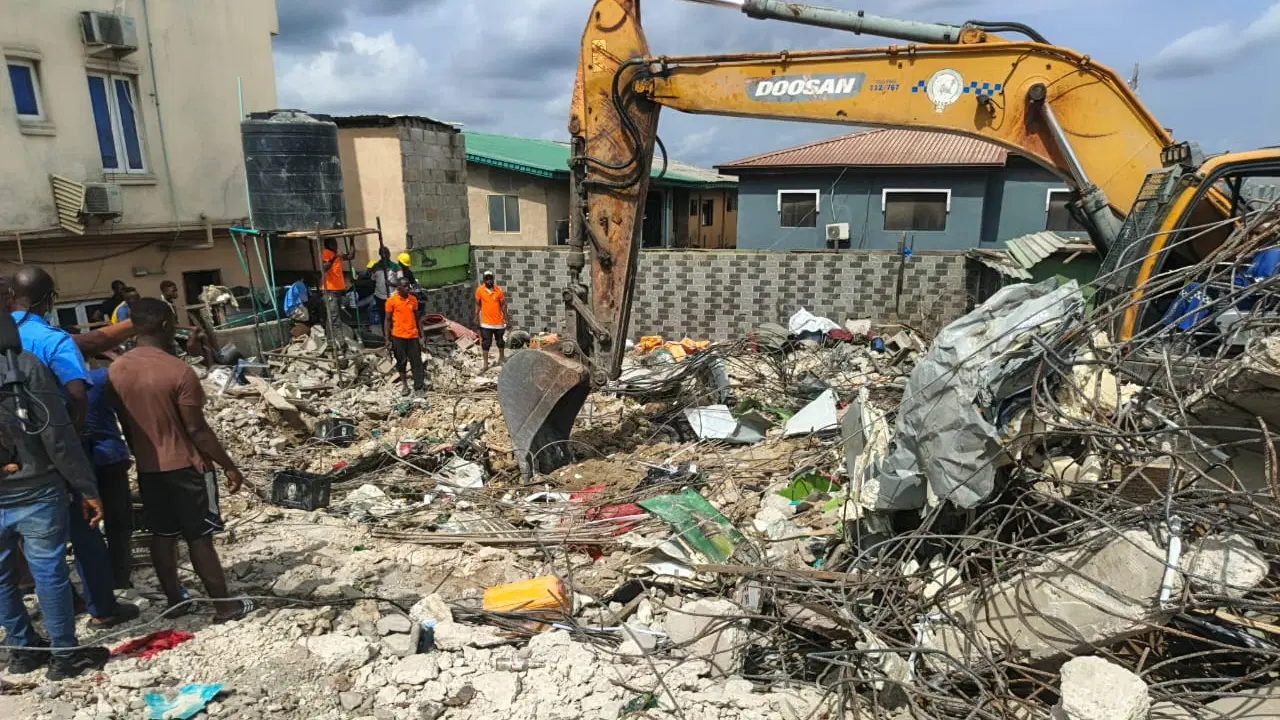
The Lagos State Government has called on market leaders across the state to support ongoing efforts to eliminate the sale of substandard building materials, a major factor linked to building collapse incidents in Nigeria’s commercial capital.
The appeal was made during a sensitisation forum organised for market leaders, association executives, and stakeholders in the construction value chain at the Alimosho Local Government Multipurpose Hall on Friday.
Speaking at the event, the General Manager of the Lagos State Materials Testing Laboratory Agency, Olayinka Abdul, represented by the Director of Business Development Unit 2, Abimbola Adenote, stressed the critical role market leaders play in ensuring only quality construction materials reach consumers.
According to her, those who oversee building materials markets serve as important gatekeepers in the construction industry because the products sold in their markets eventually become the foundation of residential, commercial, and public infrastructure.
She urged market leaders to educate traders on quality standards, collaborate with relevant regulatory authorities, and promptly report the sale of substandard building materials whenever such cases are identified.
Abdul emphasised that tackling building collapse requires collective responsibility from all stakeholders involved in the construction sector.
“We can either be part of the problem, or we can be the foundation of the solution. Let us choose to be the alliance that stopped building collapses in Lagos State,” she stated.
The renewed campaign comes amid concerns over the frequency of building collapse incidents in Lagos. Industry reports indicate that the state accounts for a significant percentage of building failures recorded nationwide.
Available data show that Lagos recorded more than 60 per cent of over 180 building collapse incidents documented in Nigeria between 2005 and 2022.
Separate findings from the Building Collapse Prevention Guild also estimate that the state accounts for approximately 55 per cent of recorded building collapse cases across the country over several decades.
Despite the alarming statistics, Abdul expressed optimism that ongoing regulatory reforms and increased stakeholder engagement are beginning to yield positive results.
She highlighted several initiatives introduced by the state government to strengthen building safety and improve construction quality.
Among them is the Certified Structural Integrity Programme, which mandates periodic structural integrity assessments for buildings every five years before Certificates of Fitness can be issued.
The programme also requires developers to conduct soil investigations before construction begins, while construction materials undergo destructive testing during project execution.
In addition, completed structures are subjected to non-destructive testing to verify their stability and compliance with safety standards.
Also Read: Nigeria, Ghana, Malawi Begin Evacuation Amid Fears of Xenophobic Protest in South Africa Ahead of June 30
Industry observers have noted that stricter enforcement measures, improved testing procedures, and greater awareness among stakeholders could significantly reduce the circulation of substandard building materials and help curb building collapse incidents in Lagos.
As the state continues to expand its urban infrastructure and housing developments, authorities believe stronger collaboration between regulators, market operators, developers, and construction professionals will be crucial in creating a safer built environment for residents.
