



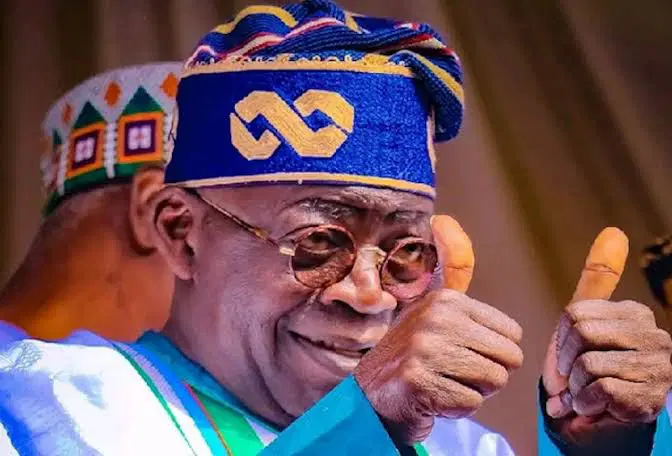
2027 Election: Accord, AAC, SDP Candidates Unite Against Tinubu
The presidential candidates of the Accord Party, African Action Congress (AAC) and Social Democratic Party (SDP) have agreed to work together ahead of the 2027 presidential election.
The proposed alliance could reshape Nigeria’s opposition politics as the three parties seek to create a joint democratic alternative to the ruling establishment.
The decision was reached during a meeting in Port Harcourt at the weekend. The meeting brought together Accord presidential candidate Dr Gbenga Olawepo-Hashim, AAC candidate Omoyele Sowore and SDP candidate Prince Adewole Adebayo.
The candidates discussed Nigeria’s democracy, economy and security situation.
They expressed concern about what they described as the growing concentration of political power and the weakening of democratic institutions.
The leaders also warned that the country could be moving away from competitive multi-party democracy.
Accord, AAC and SDP candidates agree to work together
The three opposition candidates resolved to align their political structures ahead of the 2027 election.
They said the proposed alliance would seek to mobilise workers, youths, women, professionals, entrepreneurs, civil society groups and Nigerians across ethnic, religious and regional lines.
However, they said details of the alliance are yet to be determined.
These include its structure, operational framework and choice of presidential candidate.
The candidates said the broader national interest should take priority over individual political ambitions.
Opposition alliance targets wider national support
The proposed coalition is expected to focus on building a broad opposition movement ahead of the 2027 presidential election.
The candidates said their objective goes beyond simply challenging President Bola Tinubu and the ruling political establishment.
Also Read: Tinubu Celebrates Babangida at 85, Hails His Impact on Nigeria
They described the proposed alliance as an attempt to develop a credible alternative based on democratic accountability, economic justice, security, institutional reform and social inclusion.
They also pledged to defend Nigeria’s multi-party system and oppose what they called political monopolisation.
According to the leaders, Nigerians should have the freedom to form political parties, contest elections and offer alternative policies without intimidation.
Candidates demand review of political detention cases
The opposition leaders also called for an immediate review of cases involving Nigerians detained or imprisoned over political expression, self-determination advocacy or the exercise of constitutionally protected rights.
They specifically called for the release of Mazi Nnamdi Kanu and Bichia Maisango, whom they identified with political and cultural rights advocacy.
The candidates also criticised what they described as the legal and political persecution of Sowore over his political activities.
However, they stressed that their position did not necessarily amount to an endorsement of the views or methods of the individuals concerned.
They argued that democratic societies must accommodate dissent and peaceful disagreement.
Leaders call for stronger protection of democracy
The three candidates urged the international community, democratic governments, regional institutions and international human-rights organisations to monitor Nigeria’s democratic development.
They expressed concern over alleged efforts by individuals within security agencies, electoral institutions, the judiciary, legislature and executive to weaken opposition parties.
The leaders also alleged that public institutions could be manipulated to frustrate genuine political competition.
While rejecting foreign interference in Nigeria’s internal affairs, they called for accountability where public officials or institutions abuse their authority.
They further urged international partners to document credible evidence of democratic reversals.
The candidates said targeted measures, including visa restrictions and other lawful sanctions, could be considered against individuals found to have undermined constitutional democracy.
They declared that no political party, security agency, electoral official or public institution should be above the Nigerian Constitution.
Opposition candidates criticise Tinubu’s economic policies
The candidates also criticised the economic policies of President Bola Tinubu’s administration.
They specifically cited fuel subsidy removal and currency devaluation as policies they believe have contributed to rising living costs and declining purchasing power.
According to the opposition leaders, the policies have also contributed to unemployment and widespread economic hardship.
They called for urgent economic reforms.
Their proposals include substantial salary reviews, stronger domestic production, increased investment, job creation and measures to reduce inflation.
The leaders said Nigeria needs economic policies that can improve living standards and expand opportunities for citizens.
Candidates outline plans to tackle insecurity
On insecurity, the opposition candidates called for a proactive national security strategy.
They said such a strategy should combine intelligence gathering, technology and better-equipped security forces.
They also called for stronger community cooperation, economic opportunities and effective prosecution of offenders.
The leaders rejected what they described as appeasement, selective enforcement and political complicity that could allow violent groups to operate with impunity.
Movement for Democratic Renewal launched in Port Harcourt
Meanwhile, the Movement for Democratic Renewal (MDR) has been launched in Port Harcourt, Rivers State.
The movement, which focuses on the South-South and South-East zones, was launched on Saturday.
Speakers at the event called for greater unity and a coordinated effort to address Nigeria’s political and economic challenges.
The MDR is co-chaired by Dr Gbenga Olawepo-Hashim and Nigeria Labour Congress (NLC) President Comrade Joe Ajaero.
NLC leaders and officials of industrial unions gathered at the NLC Labour House in Port Harcourt for the event.
The gathering focused on what participants described as the urgent need to rescue Nigeria’s democracy and restore hope to citizens.
Olawepo-Hashim says Nigeria must restore its democratic strength
Speaking at the event, MDR co-chairman Dr Gbenga Olawepo-Hashim said Nigeria had historically possessed significant economic potential.
He argued that the country’s prosperity began to decline after 1976.
According to him, Nigeria was once a lender rather than a borrowing nation.
He also criticised the decline of industrialisation in the country.
Olawepo-Hashim said Nigeria must rescue its democracy and improve the welfare of workers.
He argued that a democracy that fails to protect workers’ interests cannot deliver meaningful development.
Adebayo urges Nigerians to reject intimidation
SDP presidential candidate Prince Adewole Adebayo also urged Nigerians to reject intimidation and political pressure.
He encouraged workers to participate actively in elections.
Adebayo also stressed the importance of ideological unity among political movements.
He said political organisations should develop capable cadres who can move beyond protests and prepare for governance.
Ajaero: Nigerians must take responsibility
NLC President Joe Ajaero, who was represented at the event by Denja Yakub, said Nigerians could not rely on others to solve the country’s problems.
He called for greater participation by workers and citizens in the political process.
Ajaero argued that Nigeria’s industrial development requires leaders who are committed to workers’ interests.
NLC chairmen from Rivers, Akwa Ibom, Cross River, Bayelsa, Edo, Enugu, Anambra, Imo, Abia and Ebonyi attended the event.
The developments in Port Harcourt add another dimension to the emerging opposition realignment ahead of the 2027 Nigerian presidential election.
