



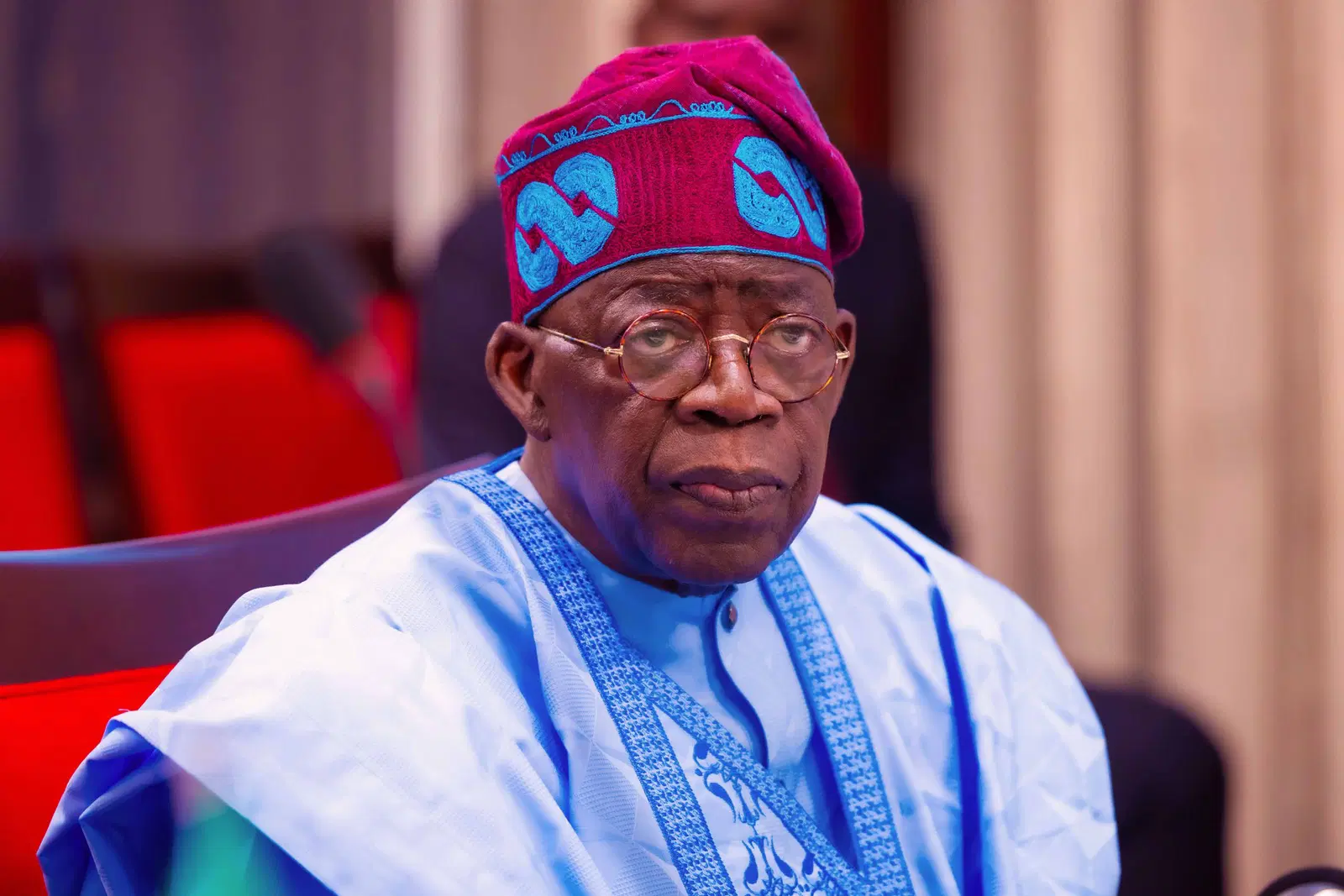
Tinubu Certificate Debate Should Not Define 2027 Election
The ongoing debate over President Bola Ahmed Tinubu’s educational certificates should not become the defining issue of Nigeria’s 2027 presidential election.
Serious questions about governance should not be reduced to repeated arguments over the academic credentials of political candidates. For a sitting president, the certificate controversy is less useful than an assessment of his policies, performance and impact on Nigerians.
More importantly, the attention given to the issue risks distracting voters from the substantive questions that should shape the election.
Any debate over Tinubu’s educational qualifications, in my view, should have been settled during the 2023 presidential election, if not earlier. It is even less useful now that Tinubu has spent more than three years in office.
As president, Tinubu’s policies affect Nigerians far more directly than the certificates he presented to the Independent National Electoral Commission, or INEC. The same principle should apply to any candidate who eventually wins the next presidential election.
What ultimately matters is how that person governs the country.
Why the Buhari and Tinubu cases are different
I held a similar view in 2015 when questions were raised about the educational qualification of the late President Muhammadu Buhari.
There were, however, important differences between Buhari’s situation and the current debate surrounding Tinubu.
In 2015, Buhari was a presidential challenger rather than an incumbent. The controversy centred largely on whether he had submitted a secondary school certificate to INEC.
The question was straightforward: had Buhari completed secondary education, and if so, where was the certificate?
Section 131(d) of the Nigerian Constitution requires a presidential candidate to be educated up to at least School Certificate level or its equivalent. Section 318(1)(d) also provides for other qualifications that may be accepted as equivalent.
Also Read: 2027: Accord, AAC, SDP Candidates Form Alliance Against Tinubu
The constitutional requirement therefore establishes a minimum educational threshold. It does not necessarily limit qualification to possession of one particular document.
INEC’s assessment of the qualifications submitted by candidates is therefore central to determining whether the constitutional requirement has been met.
Buhari had attended the Royal Military Academy Sandhurst and had a long military career before becoming a military head of state. His supporters argued that his education, training and public service provided sufficient grounds for his qualification.
The Tinubu debate, however, has raised additional questions.
The questions surrounding Tinubu’s certificates
According to claims circulating on social media, Tinubu submitted his Chicago State University degree to INEC without documentation relating to earlier levels of education.
If accurate, that has prompted questions about how he progressed through the Nigerian and American education systems.
Another question concerns how he gained admission to university if he did not possess, or did not submit, a secondary school certificate.
The most serious allegation is the claim that the university degree itself may not be genuine.
That allegation is fundamentally different from a dispute over whether a candidate submitted a particular certificate. It amounts to an allegation of forgery and therefore requires evidence.
Political campaigns will naturally use questions about an opponent’s qualifications as campaign issues. Voters, however, need to distinguish political claims from matters that have been conclusively established by competent authorities or courts.
What the Constitution says about qualifications
Educational qualifications are important, but the constitutional language concerning presidential eligibility should also be considered in its entirety.
The Constitution refers to being educated up to at least School Certificate level or its equivalent. It also recognises other forms of qualification that may be accepted as equivalent.
This raises a broader question about Nigeria’s longstanding emphasis on paper qualifications.
Higher education can demonstrate that an individual has progressed beyond the minimum level of education required for an office. Similarly, professional training, work experience and public service can provide evidence of knowledge and competence.
The issue, therefore, should not be reduced entirely to whether a candidate possesses a particular piece of paper.
That does not mean questions about the authenticity of certificates should be ignored. Where credible evidence establishes wrongdoing, the appropriate authorities should investigate and determine the matter.
The forgery allegation requires evidence
The allegation concerning the authenticity of Tinubu’s Chicago State University certificate is more serious than a simple disagreement about educational documentation.
But allegations are not the same as established facts.
If Chicago State University confirms that it did not issue a particular certificate, or if a competent court determines that the certificate is fraudulent, that would create a substantially different situation.
Until such a determination is made, political arguments should not substitute allegations for evidence.
Where a matter is before a court, Nigerians should allow the judicial process to determine the facts. Where it is not before a court, political actors should still provide credible evidence rather than relying solely on speculation or social media claims.
Voters should focus on governance
The larger problem is that the certificate controversy risks taking attention away from the issues that will directly affect Nigerians in the 2027 election.
President Tinubu has introduced major economic and political reforms during his administration. Some Nigerians have experienced significant hardship as a result, while the government maintains that the reforms are necessary to place the economy on a more sustainable path.
Those policies deserve serious scrutiny.
Opposition parties and presidential candidates should explain what they believe is wrong with the administration’s economic programme. They should also present credible alternatives and explain how those alternatives would improve living standards.
The debate should include fuel subsidy removal, exchange-rate reforms, inflation, debt, insecurity, employment and the broader performance of government.
These are the issues that voters will ultimately have to consider.
What opposition parties should tell Nigerians
A presidential election should give voters a clear choice between competing ideas and programmes.
Opposition parties should therefore tell Nigerians what they would do differently if elected.
They should explain their plans for the economy, security, education, healthcare, infrastructure and employment. They should also demonstrate why their proposed policies would produce better outcomes than those of the incumbent government.
That is how voters can meaningfully compare Tinubu with the candidates challenging him.
The 2027 election should not become another contest dominated by arguments over school certificates.
The focus should instead be on leadership, governance, policy choices and the future direction of Nigeria.
The certificate controversy should be resolved through credible evidence and the appropriate legal or institutional processes where necessary.
But unless wrongdoing is conclusively established, continuing to make the issue the centre of the presidential campaign risks distracting Nigerians from the more important question: who can govern Nigeria better?
