



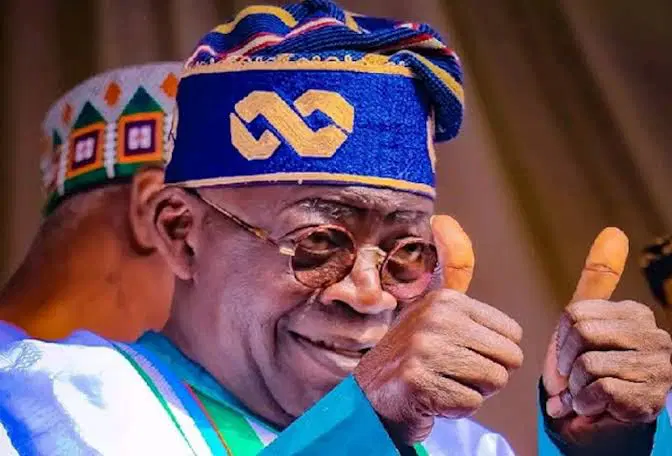
Tinubu Assures Nigerians: Refineries Will Soon Return to Operation
President Bola Tinubu has assured Nigerians that the country’s refineries will soon return to operation as his administration continues efforts to restructure the petroleum sector and strengthen domestic refining.
Tinubu gave the assurance on Thursday when he received the leadership of the Nigeria Union of Petroleum and Natural Gas Workers (NUPENG) at the Presidential Villa in Abuja.
The President also expressed concern that the benefits expected from the introduction of Compressed Natural Gas (CNG) were not reaching ordinary commuters quickly enough, saying much of the benefit was currently being captured by truck owners.
Tinubu promises refinery revival
Addressing the NUPENG delegation, Tinubu said the government was working on a structural and economic reset aimed at making the country’s refinery assets commercially viable.
He stressed that simply seeing flames or smoke from a refinery should not be regarded as evidence that the facility is operating successfully.
According to the President, the ultimate objective is to ensure that the refineries operate profitably and deliver the economic value for which they were established.
Tinubu also said he had accepted responsibility for dealing with the challenges inherited from previous administrations.
He explained that regardless of what happened in previous years, the responsibility for fixing the country’s petroleum sector now rests with his administration.
The President expressed confidence that sustained reforms, perseverance and effective management would eventually translate into improved economic conditions for Nigerians.
President highlights fuel subsidy reforms
Tinubu also reflected on his decision to remove the petrol subsidy, recalling that the policy had been met with the threat of industrial action from oil workers.
He said the government would soon publish details of how the resources generated through the subsidy reform were being utilised.
According to the President, workers at the federal, state and local government levels are already benefiting through improved capacity to pay salaries, while funds are also being directed towards major infrastructure projects.
He cited several major road projects, including the Lagos-Ibadan, Abuja-Kaduna, Abuja-Kano and Sokoto-Badagry corridors, as examples of infrastructure being supported by the government’s broader financial restructuring.
Tinubu wants CNG benefits to reach commuters
The President also called for a wider distribution of the economic benefits associated with CNG adoption.
While encouraging NUPENG and transport operators to support the government’s CNG initiative, he said the savings and benefits generated from cheaper fuel should eventually be reflected in transportation costs.
Tinubu expressed concern that the gains were currently concentrated among truck owners instead of spreading quickly enough to ordinary commuters.
He therefore urged drivers and transport operators to ensure that the benefits of the CNG transition reach the wider public.
NUPENG raises concern over casualisation
Earlier, NUPENG President Comrade Salimon Akanni Oladiti appealed to Tinubu to intervene in what the union described as the increasing casualisation of workers in Nigeria’s oil industry.
Oladiti said the practice was particularly concerning in the upstream sector and claimed that attempts to persuade some oil companies to discontinue the practice had produced limited results.
Also Read: FG Launches Crude Oil Trading Platform for Dangote, Local Refineries
He described the oil and gas industry as strategically important to Nigeria’s economy and said NUPENG and its sister union, PENGASSAN, had exercised restraint because industrial action in the sector could have significant economic consequences.
The union leader appealed to the President to use his office to address the employment practices affecting workers in the industry.
NUPENG seeks revival of petroleum depots
Oladiti also commended the administration for its ongoing rehabilitation and dualisation of federal highways.
He noted that improved road infrastructure would make long-distance transportation safer and easier for petroleum tanker drivers.
However, he called for the revival of depots operated under the Nigerian Pipelines and Storage Company network across the country.
According to him, restoring the depots would complement efforts to revive Nigeria’s refineries and improve the country’s petroleum distribution system.
The NUPENG president suggested that some of the deteriorating depots could be transferred to private investors under equity-based management arrangements.
Warri and Port Harcourt refineries
Oladiti also acknowledged government efforts to revive the Warri and Port Harcourt refineries, particularly through partnerships involving Chinese firms.
He urged the administration to apply the same determination to the country’s petroleum storage and distribution infrastructure.
The union believes that a combination of functioning refineries, operational depots and improved transportation infrastructure would strengthen Nigeria’s domestic petroleum supply chain.
The latest assurances from President Tinubu come as the Federal Government continues to pursue greater domestic refining capacity, reduce dependence on imported petroleum products and reform the country’s oil and gas industry.
