



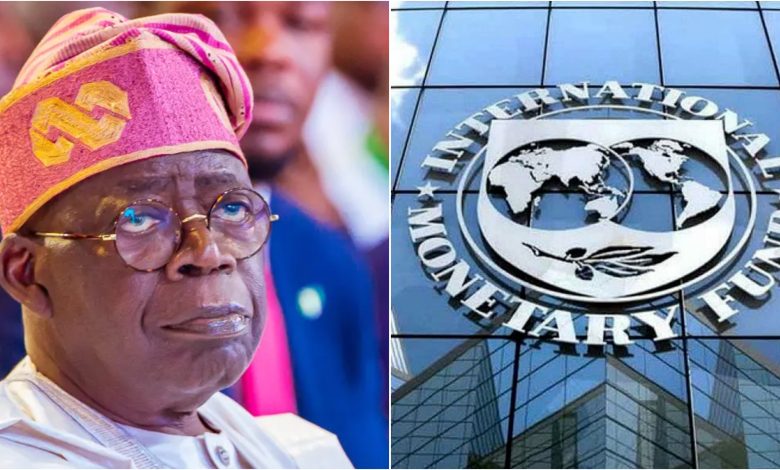
The International Monetary Fund (IMF) has urged the Nigerian government to consider measures that would tax fuel and telecom services as part of a wider strategy to strengthen public finances and increase revenue generation.
The recommendation was contained in the IMF’s 2026 Article IV Consultation Report on Nigeria, which assessed the country’s economic performance and fiscal outlook.
According to the report, Nigeria needs to expand its revenue base to improve funding for critical sectors and reduce fiscal pressures.
Under the proposal, consumers could face higher fuel prices as well as increased costs for airtime, calls, and internet data if the government decides to implement the suggested taxes.
The IMF believes the move could help the country generate significant additional income over the coming years.
The report also called for an increase in Nigeria’s Value Added Tax (VAT), which currently stands at 7.5 percent. In addition, the Fund recommended closing tax loopholes that allow some businesses and industries to avoid paying their full tax obligations.
According to the IMF, these measures could generate revenue equivalent to about 3.9 percent of Nigeria’s Gross Domestic Product (GDP) within three years.
The Fund argued that stronger revenue collection is necessary to support government spending on infrastructure, healthcare, education, and other public services.
However, the proposal to tax fuel and telecom services is expected to generate debate among stakeholders. Similar attempts in the past faced strong opposition from both consumers and industry players.
A previous proposal to introduce a five percent excise duty on telecommunications services attracted criticism from mobile network operators, consumer advocacy groups, and subscribers before it was eventually abandoned.
Telecommunications companies have repeatedly warned that additional taxes would likely be transferred to customers through higher service charges. Industry experts argue that increasing costs could affect digital inclusion efforts and make internet access more expensive for millions of Nigerians.
The possibility of higher fuel taxes is equally sensitive. Since the removal of petrol subsidies, Nigerians have experienced sharp increases in transportation costs, food prices, and general living expenses.
Labour unions and business organisations have consistently opposed policies that could further increase fuel prices, citing their impact on households and businesses already struggling with economic challenges.
Despite its recommendation, the IMF acknowledged the delicate economic situation facing Nigeria. The Fund noted that worsening poverty levels and food insecurity remain major concerns and advised the government to carefully consider the timing of any new taxes.
The report further suggested that effective social protection measures should be implemented before introducing additional levies. Specifically, it recommended strengthening cash transfer programmes for vulnerable households to cushion the impact of any future tax increases.
Beyond introducing new taxes, the IMF highlighted the importance of improving compliance with existing tax laws. The organisation projected that better enforcement, reduced tax evasion, and efforts to formalise parts of the economy could generate an additional 3.1 percent of GDP in revenue.
Also Read: Airtime Credit Surges to ₦4.6 Trillion as Nigerians Turn to Borrowed Mobile Services
Overall, the Fund estimated that a combination of new taxes, improved tax collection, and targeted relief measures for low-income citizens could result in a net revenue gain of approximately 4.6 percent of GDP over the medium term.
While the IMF’s recommendations are aimed at improving Nigeria’s fiscal position, it remains unclear whether the federal government will adopt the proposals.
Any decision to tax fuel and telecom services is likely to attract significant public attention and could face resistance from consumers, businesses, and labour groups concerned about the impact on already stretched household budgets.
For now, Nigerians will be watching closely to see whether policymakers move forward with the recommendations and how any future tax reforms might affect daily living costs across the country.
