



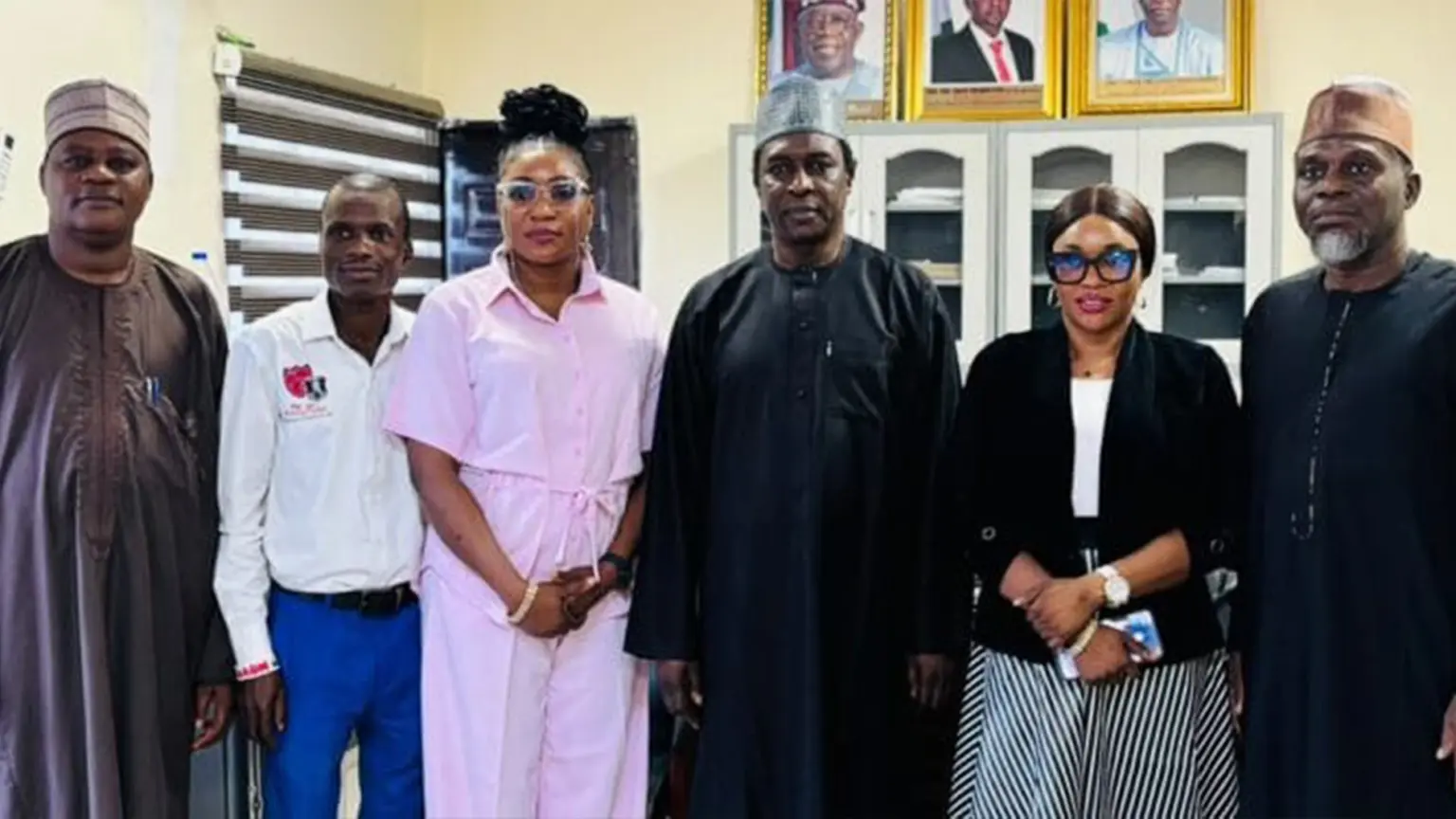
NIHSA partners environmental journalists to improve flood warnings, water management
The Nigeria Hydrological Services Agency (NIHSA) is strengthening its collaboration with environmental journalists to improve public awareness of flooding, water management and early warning systems across Nigeria.
The agency made this commitment during a meeting with the newly elected Executive Council of the Environmental Media Correspondents Association of Nigeria (EMCAN) in Abuja.
The EMCAN delegation, led by its new Chairman, Joycelyn Adah, paid a courtesy visit to NIHSA as part of efforts to deepen cooperation between the agency and environmental reporters.
NIHSA Director-General, Architect Umar Muhammed, said the media had an important role to play in ensuring that critical information about flooding and other water-related risks reaches vulnerable communities on time.
According to him, timely communication can help residents in flood-prone areas understand potential risks and take appropriate precautions before disasters occur.
NIHSA raises concern over water pollution
Muhammed also highlighted the importance of responsible water resources management, warning that poor environmental practices could contribute to water scarcity, contamination and public health problems.
He said communities could face serious consequences when water resources are poorly managed or contaminated.
“If you do not have a good environment and manage water resources, one day you wake up and you’d be shocked with what you see,” he said.
The NIHSA boss expressed particular concern about the contamination of streams and other water bodies through human activities.
He explained that polluted water sources could expose communities to diseases and other health risks, making public awareness an important part of environmental protection.
Environmental journalists to help simplify flood forecasts
NIHSA said its partnership with EMCAN would help bridge the communication gap between technical experts and members of the public.
Hydrological forecasts and early warning information can sometimes contain technical terms that may be difficult for ordinary residents to understand.
The agency therefore wants environmental journalists to help translate such information into clear and practical messages that communities can easily understand and act upon.
This is particularly important for residents living in areas vulnerable to flooding and other water-related emergencies.
NIHSA Special Assistant on Media, Yakub Aliyu, said the agency needed greater publicity to help Nigerians understand its mandate and the importance of hydrological information.
He noted that Nigeria faces both water scarcity and excess water, with flooding and water contamination adding to the country’s environmental challenges.
Aliyu also stressed the need for continuous public education on activities that pollute water bodies and increase health risks.
NIHSA plans specialised training for journalists
As part of the proposed collaboration, NIHSA is considering specialised training programmes for environmental reporters.
Aliyu said the training would help journalists develop a better understanding of flood forecasting, water resources management and early warning systems.
Improved technical knowledge, he added, would allow reporters to provide more accurate and useful information to Nigerians.
The agency believes better-informed journalists can play a stronger role in helping communities respond to flood warnings and other environmental threats.
Agency seeks stronger publicity for Annual Flood Outlook
NIHSA Technical Adviser to the Director-General, Stephen Jabo, also called for closer cooperation with media organisations.
He specifically encouraged journalists to give greater attention to the agency’s Annual Flood Outlook, which provides important information about potential flooding risks.
Jabo said NIHSA’s activities affect millions of Nigerians, but many people remain unaware of the agency’s work because of inadequate publicity.
Also Read: FG Clears N758bn Pension Liabilities, Retirees Get Payments Through 2029
He urged environmental reporters to maintain closer contact with NIHSA’s press unit, participate in relevant agency programmes and help distribute flood forecasts and other warnings.
According to him, stronger media coverage would make it easier for Nigerians to understand and benefit from NIHSA’s hydrological services.
EMCAN pledges deeper collaboration with NIHSA
Speaking earlier, EMCAN Chairman Joycelyn Adah described NIHSA as a key government agency whose activities have a direct impact on the safety and wellbeing of Nigerians.
She said environmental journalists had continued to report on NIHSA’s activities but wanted to strengthen the relationship under the association’s new leadership.
“As environmental journalists, we have been following and reporting the activities of NIHSA, but we want to do more,” Adah said.
She noted that NIHSA’s responsibilities cover areas such as hydrology, flood forecasting, early warning systems and water resources management.
Adah also said EMCAN would prioritise capacity building for its members, particularly reporters covering technical government agencies.
According to her, journalists need a clear understanding of the mandates and technical operations of government institutions to produce accurate and meaningful reports.
She proposed a structured partnership that would give journalists greater access to NIHSA’s activities and technical information.
EMCAN seeks support for COP31 coverage
The environmental journalists’ association also informed NIHSA about plans to cover the 31st Conference of the Parties (COP31) in Türkiye.
Adah said EMCAN had started efforts to raise funds for members who would attend the global climate conference.
The association is also seeking support from government agencies and environmental organisations to strengthen the participation of Nigerian environmental journalists.
Both NIHSA and EMCAN expressed optimism that their renewed engagement would lead to a sustained partnership.
The collaboration is expected to focus on public enlightenment, journalist training, flood early warnings, water resources management and improved reporting of Nigeria’s environmental challenges.
