




The Oyo Empire stands among the greatest kingdoms to emerge in West African history. From a modest Yoruba settlement, it developed into one of the largest and most influential political powers in the region, controlling vast territories across present-day southwestern Nigeria and parts of Benin and Togo.
For several centuries, the Oyo Empire shaped trade, military organization, governance, diplomacy, and culture. Its rulers built an administration that balanced royal authority with checks on power, while its cavalry enabled territorial expansion that few neighboring states could match.
Although the empire eventually declined during the nineteenth century, its political institutions, cultural traditions, and historical legacy continue to influence Yoruba society and Nigerian history today.
Origins of the Oyo Empire
The origins of the Oyo Empire are closely linked to the Yoruba people, whose traditions trace their ancestry to Ile-Ife.
According to Yoruba oral history, Ile-Ife served as the spiritual and cultural homeland from which many Yoruba kingdoms emerged.
While oral traditions contain symbolic elements, historians generally agree that Oyo developed as one of several important Yoruba states between the eleventh and thirteenth centuries.
The founder of Oyo is traditionally identified as Oranmiyan, a prince associated with Ile-Ife. Oral accounts describe him as a son or grandson of Oduduwa, the legendary progenitor of the Yoruba people.

Oranmiyan is believed to have established a settlement known as Oyo-Ile (Old Oyo), located in the northern savannah region of present-day Oyo State.
Unlike many forest-based Yoruba kingdoms, Oyo occupied open grasslands. This geographical position proved important because it supported horse breeding and cavalry warfare.
Horses struggled to survive in the dense forests farther south due to diseases spread by the tsetse fly, but the northern environment around Oyo was better suited for mounted soldiers.
By the fourteenth century, Oyo had begun developing into a structured kingdom with growing political influence.
Geography and Strategic Location
The location of the Oyo Empire played a major role in its success. Oyo-Ile was situated near important trade routes connecting the forest zones of Yorubaland with the Niger River valley and the savannah kingdoms farther north.
This position created several advantages:
- Access to long-distance trade.
- Easier communication with neighboring states.
- Opportunities to collect taxes from merchants.
- Military access to northern and southern territories.
The empire eventually covered approximately 18,000 to over 45,000 square kilometers at different stages of its expansion.
Some historical estimates suggest that, during its greatest extent in the eighteenth century, Oyo exercised influence over territories extending across more than 60,000 square kilometers, although not all regions were governed directly.
Its sphere of influence reached modern-day:
- Southwestern Nigeria
- Parts of Kwara State
- Sections of Benin Republic
- Areas of western Togo
Several neighboring kingdoms acknowledged Oyo’s authority by paying annual tribute.
Early Political Development
The ruler of Oyo carried the title Alaafin, meaning “Owner of the Palace.” Although the Alaafin held enormous prestige, he did not possess unlimited authority.
The political system gradually evolved into one of Africa’s most sophisticated constitutional monarchies. Rather than allowing absolute royal rule, Oyo established institutions that balanced power among different groups.
The kingdom’s government rested on cooperation between:
- The Alaafin
- Noble chiefs
- Military leaders
- Religious officials
- Provincial administrators
This arrangement reduced the likelihood of dictatorship while encouraging consultation before major decisions.
Government Structure of the Oyo Empire
One of the most remarkable features of the Oyo Empire was its political organization.
The Alaafin
The Alaafin served as the supreme political leader, commander-in-chief, and symbol of national unity. He oversaw diplomacy, military campaigns, taxation, judicial matters, and appointments of important officials.
Despite these responsibilities, the Alaafin remained accountable to powerful councils.
The Oyo Mesi
The Oyo Mesi consisted of seven principal chiefs led by the Bashorun, who acted as the empire’s chief adviser and, in some situations, military commander.
The council performed several functions:
- Approved major state decisions.
- Advised the Alaafin.
- Represented public interests.
- Could compel an ineffective ruler to abdicate.
If an Alaafin was considered incapable of governing, the Oyo Mesi could send him an empty calabash or parrot’s eggs. This symbolic message indicated that he was expected to end his reign, traditionally through ritual suicide.
This practice reflected the constitutional limits placed on royal authority.
The Ogboni Society
The Ogboni represented respected elders and religious authorities. They handled judicial matters, protected traditional laws, and ensured that political actions aligned with accepted customs.
The Ogboni also served as mediators during disputes between the Alaafin and the Oyo Mesi.
Military Organization and Expansion
The military strength of the Oyo Empire distinguished it from many neighboring kingdoms.
Beginning around the sixteenth century, Oyo increasingly relied on cavalry. Mounted soldiers enabled rapid movement across the northern plains, giving Oyo an advantage in warfare.
Unlike forest kingdoms that depended mainly on infantry, Oyo maintained hundreds and, during major campaigns, possibly several thousand cavalry troops.
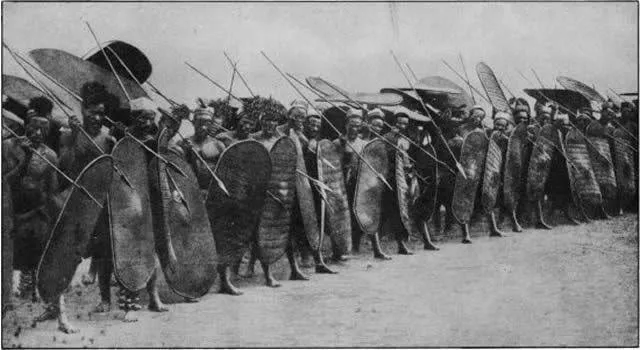
Military commanders coordinated campaigns against rival states while also protecting trade routes.
The empire expanded steadily between the sixteenth and eighteenth centuries, defeating several neighboring powers.
Notable military successes included campaigns against:
- Nupe
- Borgu
- Dahomey
- Various Yoruba rivals
By the early eighteenth century, the Kingdom of Dahomey had become a tributary state after military defeats. Dahomey paid annual tribute that included goods, slaves, textiles, and other valuable items.
The army also maintained internal security by suppressing rebellions in provincial territories.
Trade and Economic Prosperity
Trade formed the economic backbone of the Oyo Empire. Its position between the forests and the savannah enabled merchants to exchange products from different ecological zones.
Major exports included:
- Kola nuts
- Ivory
- Leather goods
- Cloth
- Agricultural products
- Slaves
Imports consisted of:
- Horses
- Salt
- Copper
- Firearms
- Beads
- Luxury textiles
The trans-Saharan trade network connected Oyo with Hausa states and other northern markets, while coastal trade linked the empire to European merchants along the Atlantic coast.
By the seventeenth century, European traders from Portugal, Britain, France, and the Netherlands maintained commercial relationships with coastal states influenced by Oyo.
Markets flourished in towns throughout the empire. Taxes collected from traders, tribute from conquered territories, and agricultural production generated considerable wealth for the royal treasury.
Society and Daily Life
Life within the Oyo Empire reflected the broader traditions of Yoruba civilization. Most people lived in farming communities where families cultivated crops such as:
- Yam
- Maize
- Millet
- Beans
- Sorghum
Women played significant roles in agriculture, commerce, and household management. Many became successful traders, managing market networks that connected rural communities with urban centers.
Craft production also supported the economy.
Skilled artisans produced:
- Pottery
- Iron tools
- Bronze works
- Leather goods
- Woven cloth
- Wood carvings
Urban centers featured organized streets, palace complexes, markets, and residential compounds occupied by extended families.
Religion centered on the worship of numerous Orisha, including Sango, Ogun, Obatala, and Oya. Religious festivals reinforced community identity and strengthened political authority.

Administration of Provinces
As the empire expanded, direct rule over distant territories became increasingly difficult. To address this challenge, Oyo developed a provincial administration.
Conquered territories retained some local rulers but acknowledged Oyo’s authority by:
- Paying tribute.
- Supplying soldiers during wartime.
- Accepting imperial representatives.
- Following agreements imposed by the Alaafin.
Provincial governors known as Ajele supervised subject territories. These officials monitored tax collection, maintained communication with the capital, and ensured loyalty to the empire.
Although this system allowed efficient expansion, it also created tensions when provincial leaders abused their authority.
Culture and Intellectual Achievement
The Oyo Empire contributed greatly to Yoruba culture. Court ceremonies emphasized royal dignity through elaborate clothing, drumming, praise poetry, and processions.
Professional historians known as Akewi preserved royal genealogies and historical events through oral tradition. Music formed an essential part of political and religious life.
Popular instruments included:
- Talking drums
- Bata drums
- Gongs
- Flutes
- Bells
Architecture reflected both practical and ceremonial needs. Royal compounds consisted of multiple courtyards surrounded by mud walls decorated with artistic designs.
Festivals celebrating Sango, the former Alaafin later associated with thunder, continue in many Yoruba communities today.
Relationship with Neighboring States
Diplomacy often accompanied military power. Rather than occupying every conquered territory directly, Oyo frequently established tributary relationships.
Neighboring kingdoms maintained internal administration while paying annual tribute. Among the important states interacting with Oyo were:
- Dahomey
- Nupe
- Borgu
- Egba
- Ibariba communities
- Hausa trading centers
These relationships encouraged commerce while reducing the costs of permanent military occupation.
The Beginning of Decline
The decline of the Oyo Empire did not occur suddenly. Instead, several political, economic, and military problems weakened the kingdom over many decades.
One important factor involved internal rivalry between the Alaafin and the Bashorun. Power struggles reduced political unity, making coordinated leadership increasingly difficult.
Provincial governors also became more independent, reducing tribute payments and challenging central authority. Meanwhile, changes in regional trade affected government revenue.
As Atlantic commerce expanded, coastal states gained greater economic importance, weakening Oyo’s traditional control over inland trade routes.
Fulani Invasions and the Fall of Old Oyo
The most serious external threat emerged during the early nineteenth century. The Fulani Jihad, led by Usman dan Fodio beginning in 1804, transformed northern Nigeria.
Although Oyo was not the primary target of the jihad, instability spread across the region. A former Oyo military commander named Afonja, who governed Ilorin, rebelled against the Alaafin.
Seeking support, Afonja allied with Fulani Islamic scholars and warriors. After his death, Fulani forces consolidated control of Ilorin. This development permanently weakened Oyo’s northern defenses.
In approximately 1835, Fulani forces captured and destroyed Old Oyo (Oyo-Ile). The royal court relocated farther south to Ago d’Oyo, known today as New Oyo.
Although the kingdom continued in reduced form, the great imperial era had effectively ended.
Legacy of the Oyo Empire
Despite its decline, the influence of the Oyo Empire remains visible across West Africa.
Its political institutions inspired later Yoruba governments and demonstrated that constitutional checks on royal authority existed long before colonial rule.
The empire also shaped Yoruba language, religion, art, music, and social organization. Many traditional titles still used today originated during the Oyo period.
Historical sites associated with Old Oyo continue attracting researchers, archaeologists, and visitors interested in Yoruba civilization.
The Alaafin remains one of the most respected traditional institutions among the Yoruba, preserving centuries of cultural heritage despite changes brought by colonialism and modern governance.
Today, scholars regard Oyo as one of pre-colonial Africa’s most organized states because of its sophisticated administration, military innovation, commercial success, and enduring cultural achievements.
Historical Significance
The Oyo Empire occupies an important place in African history because it demonstrated that complex political systems developed independently within West Africa long before European colonization.
Its government balanced monarchy with institutional oversight, reducing the concentration of power in a single ruler.
The empire also showed how geography could influence military strategy, with cavalry becoming central to expansion across the savannah.
Economically, Oyo connected inland and coastal trade networks, contributing to regional prosperity for several centuries.
Although internal political conflict, shifting trade patterns, and external pressures eventually weakened the empire, its achievements remain significant.
The history of Oyo continues to provide valuable insight into state formation, governance, diplomacy, military organization, and cultural development in pre-colonial Africa.
Also Read: How Northen Nigerian Fashion Preserves Cultural Identity and Historical Heritage
Frequently Asked Questions (FAQs)
1. Who founded the Oyo Empire?
According to Yoruba oral tradition, the Oyo Empire was founded by Oranmiyan, a prince associated with Ile-Ife and regarded as a descendant of Oduduwa. Historians believe the kingdom emerged between the eleventh and thirteenth centuries.
2. Why was the Oyo Empire so powerful?
Its strength came from an effective political system, a well-organized cavalry, control of major trade routes, agricultural production, tribute from neighboring states, and strong military leadership.
3. What territories did the Oyo Empire control?
At its height during the eighteenth century, the empire controlled much of present-day southwestern Nigeria and exercised influence over parts of modern Benin Republic and western Togo through direct administration and tributary relationships.
4. What caused the decline of the Oyo Empire?
The decline resulted from internal political struggles, weakened central authority, provincial rebellions, changes in trade routes, the rebellion of Afonja at Ilorin, and the expansion of Fulani forces during the nineteenth century, which led to the destruction of Old Oyo around 1835.
5. Why is the Oyo Empire still important today?
The Oyo Empire remains important because it shaped Yoruba political traditions, culture, language, religion, and traditional leadership. Its administrative system and historical achievements continue to be studied as examples of advanced pre-colonial African governance.
