



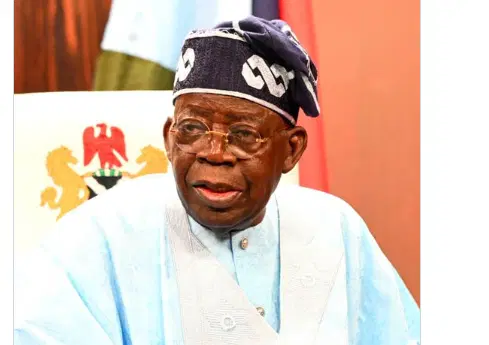
Tinubu Defends $20.5bn Loan Plan, Says Nigeria Must Focus on What It Builds
President Bola Tinubu has defended his administration’s plans to secure fresh external loans, saying the funds will support major infrastructure projects and strengthen Nigeria’s economy.
He argued that the most important issue is not how much the country borrows, but what it achieves with the money.
In a statement titled From Reforms to Delivery: Our Infrastructure Investment and Growth Strategy, Tinubu said investments in roads, electricity, ports, healthcare and education would create opportunities for future generations.
However, the Nigeria Labour Congress (NLC) has questioned the need for more borrowing. The labour union wants the Federal Government to explain its request for $20.5 billion and €1.45 billion in fresh external loans.
Tinubu Lists Major Projects the Loans Will Support
The President identified several infrastructure projects expected to improve Nigeria’s productive capacity.
They include the Lagos-Calabar Coastal Highway, Sokoto-Badagry Superhighway and Trans-Sahara Superhighway. He also listed electricity grid upgrades and the modernisation of major commercial ports in Lagos.
According to Tinubu, these projects will connect economic centres, reduce transportation costs and improve trade.
He added that investments in healthcare, education and vocational training would support the infrastructure programme.
The President said the Lagos-Calabar Coastal Highway could reduce logistics costs along its route by 15 to 20 per cent. He also projected that the project could add up to two per cent to Nigeria’s Gross Domestic Product (GDP).
The expected economic benefits include increased trade, tourism and industrial activity.
The highway is also projected to create about 100,000 direct jobs in construction and engineering. More than 150,000 indirect jobs could also emerge in logistics, materials supply and related services.
Tinubu said the government was not simply building roads. Instead, it was creating economic corridors that would connect markets and open up new opportunities for businesses.
He maintained that Nigeria would need sustained infrastructure investment to achieve his administration’s ambition of building a $1 trillion economy by 2030.
President Highlights Economic Improvements
Tinubu also defended the borrowing plan by pointing to economic indicators recorded since his administration introduced reforms in May 2023.
He said Nigeria’s economy grew by 4.43 per cent in the second quarter of 2026. Headline inflation also fell to 14.63 per cent in September, compared with 20.98 per cent in the same period a year earlier.
The President added that Nigeria’s gross external reserves rose to $55.1 billion as of October 9, 2026. This included about $46 billion in net reserves.
He also said the country’s tax-to-GDP ratio increased from seven per cent to 12.5 per cent.
Tinubu attributed these developments to several government policies. They include the removal of petrol subsidies, exchange rate unification, tax reforms and measures to control inflation.
He described the decisions taken since 2023 as difficult but necessary.
The President further argued that improved economic conditions had strengthened Nigeria’s position in international financial markets.
According to him, positive assessments from global credit rating agencies and other financial institutions showed growing investor confidence.
He said this could help Nigeria attract more institutional investors, secure longer-term financing and reduce borrowing costs.
Tinubu Explains New Approach to Government Borrowing
The President said his administration was moving away from borrowing mainly to cover short-term government expenses.
Instead, he wants borrowed funds directed towards projects that can generate economic returns, create jobs and improve living standards.
He also explained that longer-term loans could help match repayment periods with the lifespan of infrastructure projects.
According to Tinubu, this approach would reduce refinancing pressure and help the country secure more competitive financing.
He stressed that securing loans alone would not represent success. The government must complete projects and ensure Nigerians benefit from them.
Five Economic Priorities Outlined
Tinubu listed five priorities for the next phase of the Federal Executive Council’s economic strategy.
They include making food more affordable and stabilising energy prices. The plan also focuses on better budget coordination and stronger fiscal discipline.
Other priorities include completing major infrastructure projects, improving economic policies and making regulations more efficient.
The President also highlighted the need for targeted household support and greater investment in human development.
He said the government’s performance should be measured by completed projects, job creation, increased investment and improved living conditions.
NLC Questions Need for Fresh External Loans
Despite the President’s defence, the Nigeria Labour Congress has challenged the Federal Government’s decision to seek additional external loans.
NLC President Joe Ajaero questioned the justification for borrowing $20.5 billion and €1.45 billion, especially after the government reported increased revenue following the removal of the petrol subsidy.
Speaking on Channels Television’s The Morning Brief, Ajaero asked why the government continued to seek loans from international financial institutions despite claiming that it now had more money.
He also questioned the country’s continued borrowing from organisations such as the International Monetary Fund and the World Bank.
The labour leader argued that rising government revenue should prompt a fresh review of the borrowing plan.
Ajaero Raises Questions Over Higher Oil Prices
Ajaero also pointed to rising crude oil prices as another reason the government should explain its borrowing plans.
He noted that Nigeria’s 2026 budget was based on an oil price benchmark of $70 per barrel.
However, he said crude oil prices had risen above $100 per barrel amid tensions involving the United States and Iran.
Also Read: CAF Reverses Decision as AFCON Returns to Two-Year Format
The NLC president questioned whether Nigeria still needed additional loans under those conditions.
He also argued that higher oil earnings and increased revenue for oil-producing states should be considered when assessing the need for fresh borrowing.
However, Ajaero clarified that the NLC had no authority to approve or reject government loans. He noted that the decision rested with the relevant government institutions.
He urged Nigerians and public accountability agencies to demand clear explanations from the Federal Government.
The disagreement highlights the debate over Nigeria’s borrowing plans. While the Tinubu administration says the loans will support long-term development, the NLC wants stronger justification for taking on more external debt.
