



PFIPC: Reps Uncover Forged Documents, 58 Bank Accounts, ₦400m Transaction
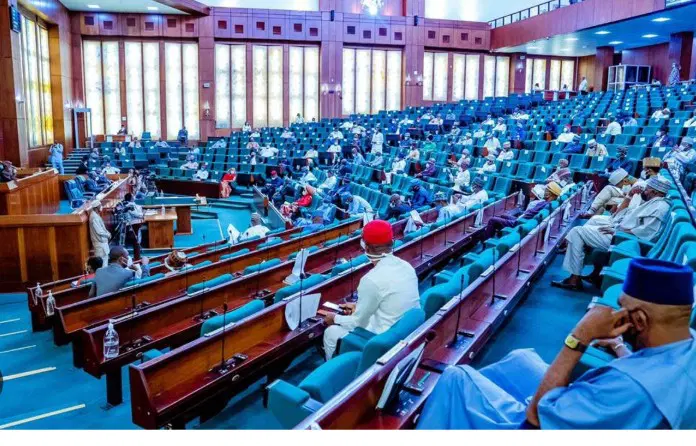
The House of Representatives committee investigating the controversial Presidential Foreign Intervention Promotion Council (PFIPC) has uncovered alleged forged and altered government documents used to present the organisation as a legitimate federal agency.
The committee also identified about 58 bank accounts allegedly linked to Prince Adeniyi Adeyemi, who was presented as the Director-General of the purported council.
Lawmakers further disclosed an alleged ₦400 million transaction involving Adeyemi, which remains under investigation.
However, the committee said its preliminary findings did not establish any involvement by the Chief of Staff to the President, Femi Gbajabiamila, in creating or operating the purported organisation.
The Ad Hoc Committee, chaired by Rep. Yusuf Adamu Gagdi, said the evidence before it indicated that PFIPC was not lawfully established by the Federal Government.
It also found that several documents allegedly used to give the organisation presidential and legislative backing were forged, fabricated or altered.
Reps exonerate Gbajabiamila
The committee said a purported letter appointing Adeyemi as PFIPC Director-General and allegedly bearing Gbajabiamila’s authority and signature was not issued by the Chief of Staff or the Presidency.
Evidence obtained from the State House, according to the committee, showed that no such appointment had been made or approved.
The lawmakers also found that the letterhead used on the document was not authentic State House letterhead. Its reference number was also said to be inconsistent with the Presidency’s official system.
The committee said the document’s format, language and administrative features differed materially from genuine State House correspondence.
It therefore made a preliminary finding that the appointment letter was fabricated and falsely attributed to the Presidency.
Rather than finding evidence linking Gbajabiamila to the alleged scheme, the committee said documents before it showed that he took steps to initiate investigations after concerns about the organisation were brought to his attention.
The committee said the Chief of Staff contacted the Nigeria Police Force, Office of the National Security Adviser, Department of State Services and Economic and Financial Crimes Commission after receiving an alert from the Nigerian Investment Promotion Commission over suspected fraudulent activities.
It added that Gbajabiamila also initiated administrative checks through relevant government institutions.
The committee consequently said its evidence did not establish that the Chief of Staff authorised, approved, established or participated in PFIPC’s activities.
Committee uncovers fake Executive Order
Another major finding involved a purported Presidential Executive Order No. 5 dated February 24, 2026.
The document was allegedly used to give PFIPC legal authority.
However, the committee said available evidence indicated that the document was neither issued nor approved through the lawful processes of the Presidency.
Lawmakers described the alleged fabrication of a presidential instrument as a serious matter capable of undermining the authority of the Nigerian state.
Purported National Assembly Act allegedly altered
The committee also uncovered a document presented as an Act of the National Assembly establishing PFIPC.
According to the lawmakers, the document was never passed by both chambers of the National Assembly, assented to by the President or gazetted as an Act of the Federation.
The committee further alleged that sections of a document belonging to another institution had been electronically altered, mutilated or substituted to create the impression that Parliament had established the purported agency.
The lawmakers warned that no individual or organisation could manufacture legislative authority by altering or fabricating parliamentary documents.
Fake State House letter used to obtain government code
Investigators also found a letter dated November 7, 2024, which was purportedly issued by the State House and addressed to the Accountant-General of the Federation.
The letter requested an administrative code for PFIPC and was allegedly signed by a person identified as Akambi Adewale, described as a Director of Administration and Support Services.
The committee said the State House confirmed that the office cited in the letter did not exist in the stated form.
It also found that the purported directorate did not exist as represented and that no State House official known as Akambi Adewale served in the claimed capacity.
The lawmakers therefore made a preliminary finding that fictitious names, offices and official designations were allegedly used to mislead a key financial institution of the Federal Government.
Accountant-General, Budget Office face scrutiny
The Office of the Accountant-General of the Federation confirmed that its response to the purported State House request was genuine, according to the committee.
However, the office acknowledged that the response should not have been released to Adeyemi or another unauthorised individual.
The committee is now examining whether the incident resulted from negligence, failure to follow verification procedures, a breach of correspondence rules or deliberate facilitation.
The Budget Office of the Federation is also under scrutiny over how the purported organisation gained recognition within the Federal Budget Framework despite allegedly lacking legal status.
PFIPC occupied Federal Secretariat office
The committee further found that the purported organisation occupied office space within the Federal Secretariat Complex without lawful allocation from the Office of the Head of the Civil Service of the Federation.
According to the lawmakers, part of an accommodation previously allocated to the Office of the Secretary to the Government of the Federation was made available to the purported organisation by some officials without proper authority.
The committee said the use of the government facility helped the organisation create an appearance of legitimacy.
39 people allegedly recruited
The investigation also uncovered approximately 39 people who were allegedly presented as employees of PFIPC.
The committee said it was examining their recruitment and appointment letters, as well as identity cards, salaries and allowances.
It is also investigating allegations that some individuals may have been asked to pay money in exchange for employment.
However, the lawmakers said they would distinguish between people who were allegedly deceived and those who knowingly participated in or benefited from the organisation’s activities.
58 bank accounts linked to Adeyemi
Financial records provided another major lead in the investigation.
The committee said preliminary information linked identifying details associated with Adeyemi to approximately 58 bank accounts.
More than 30 of the accounts were reportedly operated in the names of different agencies, companies, foundations or related entities.
The lawmakers said they were still reconciling registration records, account mandates, beneficial ownership details and transaction histories.
They stressed that the discovery of the accounts did not mean every account or entity involved was unlawful.
₦400m transaction under investigation
The committee also disclosed an alleged ₦400 million payment made by a company to Adeyemi in four instalments.
The company reportedly claimed that it made the payments after being promised a contract relating to the renovation, furnishing or improvement of a residence allegedly allocated to Adeyemi in his claimed official capacity.
Investigators are tracing the destinations of the funds, the account holders and the beneficial owners.
Also Read: Troops Kill Terrorists, Recover 793 Rounds of Ammunition in Zamfara, Kaduna
They are also examining the ownership and status of the property allegedly presented as an official residence.
The committee stressed that criminal guilt had not been established and that all affected individuals remained entitled to fair hearing and due process.
Reps warn against impersonating government institutions
The committee said the investigation had exposed concerns that went beyond the alleged creation of a fake government agency.
It warned that fabricating presidential and legislative documents could undermine the integrity of Nigeria’s constitutional institutions.
The lawmakers said the authority and instruments of the Federal Republic of Nigeria must not be appropriated by private individuals or organisations for personal gain.
The committee identified Adeyemi as the principal individual associated with the representation and operation of the purported organisation, as well as with a wider network of related entities.
However, it emphasised that its findings remained preliminary and did not constitute a final determination of criminal guilt.
The committee recommended that security and anti-corruption agencies complete their investigations and prosecute any individual against whom sufficient admissible evidence is established.
It also called for the tracing, preservation, freezing and recovery of proceeds linked to any established unlawful activity, subject to the law and applicable judicial processes.
The committee said it would conclude the outstanding aspects of its investigation before submitting a final report to the House of Representatives.
The final report is expected to determine individual and institutional responsibilities and recommend possible legislative, administrative, disciplinary, civil, financial or criminal action.
On the allegation that Gbajabiamila authorised or participated in the activities of PFIPC, the committee’s preliminary position remained that it had found no evidence establishing his involvement.
Instead, it said the evidence showed that the Chief of Staff took steps to trigger investigations after concerns about the purported organisation were brought to his attention.
