



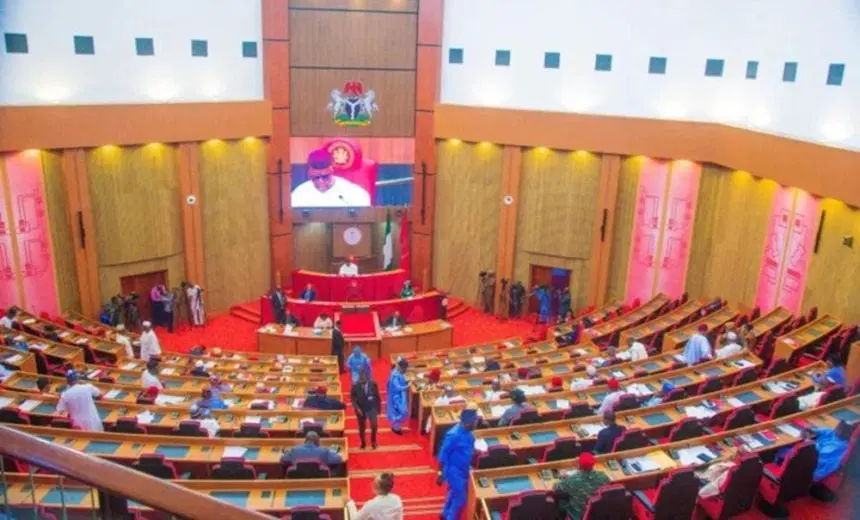
The Nigerian Senate has passed the State police bill, bringing the country a step closer to one of the most significant security reforms in its history.
If the amendment completes the remaining constitutional requirements, governors across the country will gain the authority to appoint Commissioners of Police and oversee police operations within their respective states.
The development is expected to change how law enforcement is managed across Nigeria, where policing has remained under the exclusive control of the Federal Government since independence.
Under the existing system, governors are widely referred to as the Chief Security Officers of their states, yet they have no direct authority over the Nigeria Police Force.
State Commissioners of Police report to the Inspector-General of Police and the Police Service Commission at the federal level, meaning governors cannot independently deploy officers or make operational decisions during security emergencies.
The newly approved State police bill seeks to address that long-standing concern by creating state-controlled police services.
Each state would establish its own police force, headed by a Commissioner of Police appointed by the governor.
Officers would also be recruited and managed within their respective states, allowing them to develop stronger knowledge of local communities and respond more quickly to security threats.
Supporters of the reform argue that decentralising policing could improve intelligence gathering, speed up emergency responses and strengthen efforts to combat kidnapping, banditry, communal violence and other security challenges affecting different parts of the country.
The push for state policing has gained momentum in recent years as many governors repeatedly complained that they lacked the legal authority to direct police officers during periods of crisis.
Several state leaders argued that waiting for federal approval often delayed security operations at critical moments.
The proposed structure is also similar to policing models used in countries such as the United States, Canada and India, where federal and state governments share responsibility for law enforcement.
Advocates believe Nigeria’s growing population and increasingly complex security challenges make a centralised policing system less effective than it once was.
Despite the Senate’s approval of the State police bill, the proposal continues to divide public opinion.
Some Nigerians have expressed concerns that governors could misuse state-controlled police forces to intimidate political opponents, interfere with elections or silence critics.
Reacting to the development on X, Morris Monye questioned the proposal, saying:
“I do not completely agree with state police. It might be tools by Governors to rig their state elections.”
Others also warned that transferring policing powers to state governments could create new opportunities for abuse if strong oversight mechanisms are not put in place.
However, supporters insist that constitutional safeguards, independent oversight institutions and judicial review can help prevent political interference while ensuring accountability within the proposed state police system.
Although the Senate has approved the constitutional amendment, the State police bill must still satisfy all remaining constitutional procedures before it becomes law.
Also Read: Nigerian Police Officers Barred from TikTok, Facebook and Other Social Media Platforms
Once fully enacted, the reform would represent one of Nigeria’s most far-reaching changes to policing, giving state governments direct control over local law enforcement for the first time.
The coming months are expected to determine whether the proposed reform becomes a permanent part of Nigeria’s constitutional framework and whether it can deliver the improved security many Nigerians have long demanded.
