



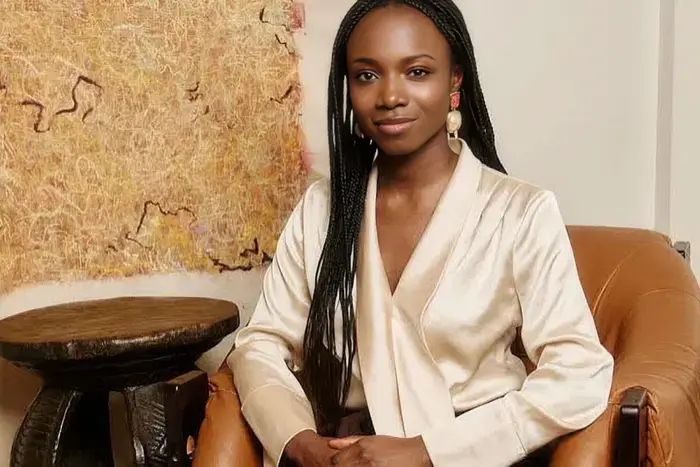
Meet Yinka Ogunbiyi, the Nigerian-American Engineer Behind the World’s First Hair-Braiding Robot
Nigerian-American engineer Yinka Ogunbiyi is making waves in the beauty and technology industries after co-developing HaloBraid, an automated hair-braiding robot designed to make hairstyling faster and easier for professional braiders.
Ogunbiyi and her co-founder, David Afolabi, developed the technology after years of research and more than 600 prototypes. Their invention is designed to help hairstylists braid individual sections of hair up to five times faster while reducing the physical strain associated with repetitive hand movements.
Described as the world’s first automated hair-braiding robot, HaloBraid was created to improve the process of protective hairstyling. Its first public demonstration, shared in October 2026, showed the machine performing the repetitive weaving involved in braiding.
How HaloBraid Hair-Braiding Robot Works
Unlike a machine designed to replace hairstylists, HaloBraid is intended to work alongside professionals.
The stylist first sections the customer’s hair and starts each braid manually. The device then takes over the repetitive finishing process before the stylist completes the final touches.
According to the company, this approach could help professionals braid individual sections up to five times faster, potentially reducing the time customers spend in salon chairs.
The technology also aims to address the physical demands of professional braiding. Hours of repetitive hand movements can contribute to pain and injuries among hairstylists, making automation a possible way to reduce some of that strain.
How Yinka Ogunbiyi Got the Idea
The idea behind HaloBraid came from Ogunbiyi’s personal experience during the COVID-19 lockdown in 2020.
Unable to visit a salon, she decided to make knotless braids herself. However, the process took four days, prompting her to question why there was no technology available to make hair braiding faster.
With a background in biomechanical engineering and degrees from Harvard University, she teamed up with David Afolabi to turn the idea into a working product.
The two founders spent years developing the machine, producing more than 600 prototypes and consulting professional braiders to understand the practical challenges of the industry.
Yinka Ogunbiyi and David Afolabi Win Harvard Innovation Challenge
Their work received major recognition in 2025 when the HaloBraid team won Harvard University’s President’s Innovation Challenge.
The achievement earned the founders a $75,000 grand prize. Ogunbiyi announced the win on LinkedIn, describing the team as honoured to have been selected from a competitive group of startups.
Also Read: Pastor Joel Adedeji Reveals Money Ritual and Loss of Leg
She also noted that the founders had the opportunity to present their mission before an audience of approximately 2,000 people.
The award marked an important milestone in the development of a technology that combines engineering with the beauty industry.
HaloBraid Secures $7 Million in Seed Funding
HaloBraid has also secured $7 million in seed funding to support its commercial rollout.
The investment is expected to support the company’s efforts to bring the hair-braiding technology closer to the market.
For professional hairstylists, the device could offer a way to reduce repetitive work and shorten appointment times. Customers may also benefit from a faster braiding process.
Through HaloBraid, Yinka Ogunbiyi is bringing an engineering solution to a familiar challenge in the beauty industry. Her work highlights how technology can support traditional skills while creating new possibilities for professionals and customers.
