



The Federal Government has taken another step towards improving emergency response services by accelerating plans to introduce a single national emergency number across the country.
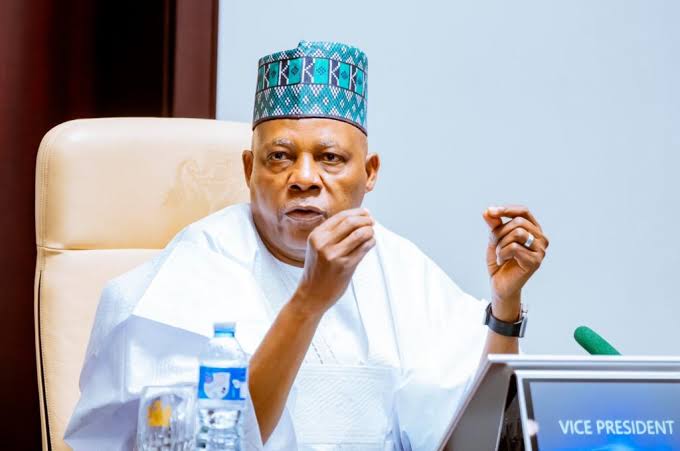
Vice President Kashim Shettima has directed the Nigerian Communications Commission (NCC) to develop a comprehensive roadmap for adopting 112 as Nigeria’s unified emergency contact line.
The directive came during a meeting with the Chairman of the NCC Governing Board, Idris Olorunnimbe, and members of the commission at the Presidential Villa in Abuja.
The move follows the approval of the initiative by the National Economic Council (NEC), which also established a multi-agency implementation committee.
The committee will be coordinated by the Office of the Vice President in collaboration with the NCC.
According to a statement issued by the Senior Special Assistant to the President on Media and Communications in the Office of the Vice President, Stanley Nkwocha, the meeting focused on finalising the strategy for implementing the nationwide emergency call initiative.
Shettima Seeks Full Support From Emergency Responders
Shettima stressed that introducing a national emergency number would only succeed if emergency agencies at every level actively participated in the project.
He directed the NCC to work closely with the National Emergency Management Agency (NEMA), citing the agency’s experience in disaster response, emergency relief and rehabilitation across Nigeria.
The Vice President also assured the delegation that funding for the initiative would be sourced through the National Economic Council alongside contributions from the private sector.
He further emphasised the need for strong collaboration among all emergency response institutions, including security agencies, ambulance services and state governments, to ensure the system functions effectively once operational.
NCC Says Infrastructure Is Already Taking Shape
Speaking during the meeting, NCC Governing Board Chairman Idris Olorunnimbe disclosed that the commission has already established about 35 Emergency Communications Centres across the country to support the planned nationwide service.
According to him, the major task now is securing stronger commitment from governors and all agencies responsible for responding to emergency calls.
“In addition, we also need the full commitment of all response agencies because if someone calls for police intervention and, for some reason, the call does not reach the police, that person will not receive the help they need,” Olorunnimbe said.
He continued:
“We need commitment at every level of all response agencies, from top to bottom, including the Nigeria Police Force, ambulance services across the states, and at the national level, the National Emergency Management Agency.”
He added that every organisation involved has a responsibility to support the initiative.
“Everyone is expected to buy into this initiative and recognise its importance. It is a patriotic duty to our country to ensure that anyone in distress can get the help they need in a very swift manner.”
The proposed national emergency number is modelled after the internationally recognised 112 emergency system used across the European Union and several other countries.
Also Read: First Lady Unveils the Remodeled Abuja City Gate
Once fully implemented, it will replace Nigeria’s multiple emergency contact lines with a single coordinated number capable of directing distress calls to the appropriate emergency responders in real time.
Officials believe the unified system will improve response times, strengthen coordination among agencies and make it easier for Nigerians to access help during emergencies.
