



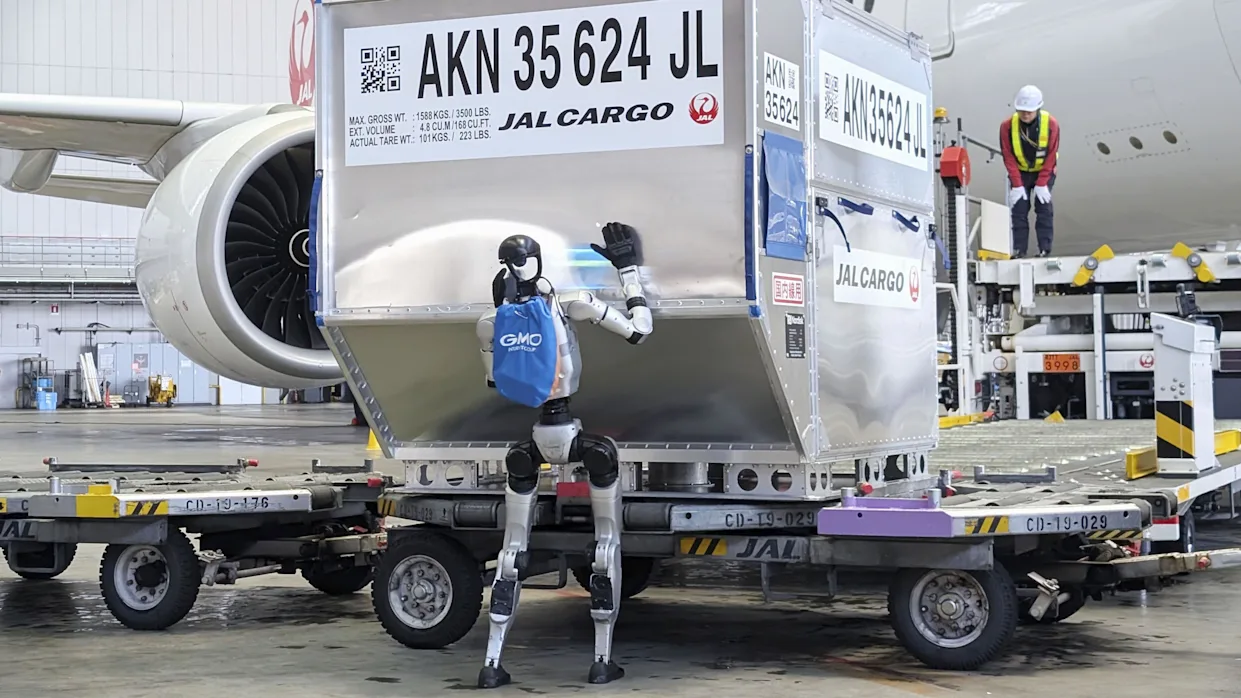
Japan Airlines will begin testing humanoid robots in ground handling work at Tokyo Haneda Airport from May. The airline uses this trial to support its staff as travel demand rises and Japan faces a shortage of workers.
The two-year trial will introduce robots that handle physically demanding airport tasks. Japan Airlines works with GMO AI and Robotics on the project. The company says the robots will first assist ground operations and may take on wider duties later.
Japan Airlines employs about 4000 ground handling staff. It introduces an initiative to support workers facing growing demands. Aviation work in Japan struggles with fewer workers and a sharp rise in international arrivals.
Japan sees a strong recovery in tourism. More than seven million foreign visitors arrived in the first two months of this year, according to JTB Group. This increase adds strain to airport operations, especially in ground services that still rely on manual labour.
During a media demonstration on Monday, GMO AI and Robotics president Tomohiro Uchida explained that airports look highly automated, but many core tasks still depend on human workers. He added that labour shortages now affect many parts of the sector.
Japan Airlines believes robots can reduce physical load on employees and improve efficiency. Yoshiteru Suzuki, president of the airline ground service division, said robots in demanding tasks will bring benefits to employees, according to Kyodo News. The airline also studies how robots may support cabin cleaning and ground equipment operation in the future.
Japan faces long term labour shortages caused by an ageing population and low birth rates. At the same time, travel recovery increases the need for efficient airport work. Japan Airlines aims to balance rising operational needs with limited human resources through automation. The airline sees the trial as a way to learn how robotics can function in real world airport settings without affecting safety or service quality.
Robots already operate in some Japanese airports. They assist with security patrols and customer support in retail areas. However, heavy ground handling tasks still remain mostly manual. If the trial succeeds, Japan Airlines could expand robotic use across more airport roles. This may change how airports manage labour intensive duties in the coming years.
Japan Airlines will now evaluate how robots perform alongside human workers at Haneda Airport during daily operations. The airline will track efficiency, safety, and reliability during the trial period.
Teams will also observe how staff and robots coordinate tasks in busy airport conditions. Japan Airlines expects the data from this trial to guide future decisions on automation use. The airline continues to focus on safe operations while it tests new technology in real airport environments.
If results prove positive Japan Airlines may extend robotic support to more ground service roles. The trial marks an important step in how aviation work in Japan may change over time.
Japan Airlines notes that it will keep human oversight in all safety related duties even as automation expands across operations. Safety teams will remain responsible for critical decisions during ground handling and airport coordination. T
he airline says staff training will continue so workers can adapt to new tools and systems. It also expects that robots will support employees rather than replace essential human roles. Industry observers in Japan watch the trial closely as airports search for better ways to handle rising travel activity.
Japan Airlines hopes the findings will help improve service quality and working conditions across its network. Japan Airlines continues to test new solutions that help improve airport efficiency while maintaining safe and steady service for passengers across all operations in coming years ahead further.
