

Mali Attacks Kill Defence Minister Sadio Camara
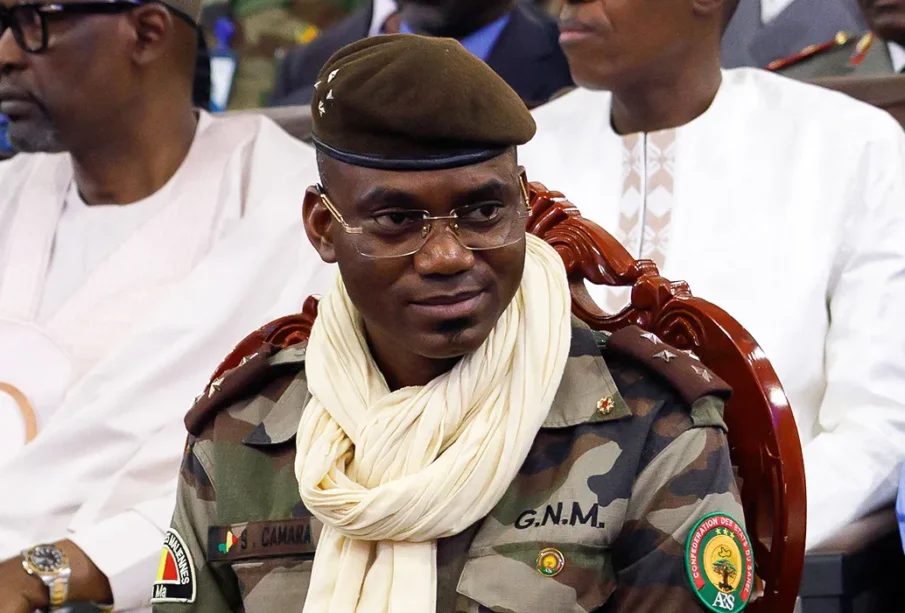
The latest Mali attacks have shaken the country after Defence Minister Sadio Camara died from injuries after a suicide truck bombing near Bamako. Officials describe the assault as one of the most coordinated waves of violence in recent years.
At the same time, attacks linked to jihadist groups and separatist fighters have increased across several regions. As a result, fears of further instability continue to grow in the already fragile West African state.
State media confirmed that Camara died after suffering serious injuries during a confrontation with armed attackers. The attackers targeted his residence in Kati, a military town close to the capital.
According to authorities, a vehicle packed with explosives drove straight into his home. The explosion caused a powerful blast and destroyed parts of the building. In addition, several members of his family died in the attack, based on reports from news agencies and relatives.
Government spokesman Issa Ousmane Coulibaly said Camara tried to resist the attackers. He reportedly killed some of them before they overpowered him. However, he was later taken to the hospital, where he died from his injuries. Meanwhile, officials confirmed that the explosion caused major destruction in the area. It also damaged a nearby mosque where worshippers were present at the time.
Coordinated Wave of Violence Across the Country
Security sources revealed that the attack on Camara’s residence formed part of wider coordinated assaults across Mali. These operations involved Islamist militants and separatist armed groups. Fighting occurred in several locations, including Kati, Gao, Mopti, Sevare, and Kidal. This shows a broad escalation that stretched government forces across multiple fronts.
The separatist Azawad Liberation Front claimed responsibility for parts of the northern operations. The group has long demanded an independent Tuareg homeland in northern Mali. At the same time, Jama’at Nusrat al Islam wal Muslimin, a group linked to al Qaeda, reportedly launched attacks in other regions.
Analysts believe the level of coordination marks a serious development. Ulf Laessing, who leads the Sahel programme at the Konrad Adenauer Foundation, described the situation as possibly the largest coordinated jihadist attack in Mali in years. He also warned that armed groups are expanding their reach.
In Kidal, intense clashes continued between government forces, Russian mercenaries, and the Azawad Liberation Front. Reports from both sides suggest changing control of territory. However, independent confirmation remains difficult. The separatist group claimed that Russian forces agreed to withdraw from Kidal after heavy fighting. Still, Mali’s military has not confirmed this claim.
Military Response and Rising Tensions
Following the attacks, Mali’s armed forces said they had control over most affected areas. Even so, fighting continued in several locations. State broadcaster ORTM reported that at least 16 people suffered injuries.
It also stated that security forces killed several militants during clashes. Despite this, officials admitted that operations were still ongoing in many regions.
The military government, led by General Assimi Goïta, stated that the violence would not go unanswered. Shortly after, authorities issued a nationwide security alert. They increased patrols, reinforced checkpoints, and tightened movement in key cities.
In Bamako, officials imposed a night curfew from 21:00 to 06:00 local time. This step aims to prevent further attacks and restore order. At the same time, military sources confirmed continued operations in Kati and nearby areas, where the initial explosion occurred. In addition, security forces moved General Goïta to a safer location after the attack, showing the seriousness of the situation.
Despite these actions, insecurity remains widespread. Large parts of northern and central Mali continue to face frequent attacks from both Islamist militants and separatist groups. These groups often exploit weak state control. As a result, they carry out ambushes, raids, and bombings against both military and civilian targets.
The death of Camara has raised concerns within the military leadership. He played a key role in coordinating defence operations against insurgent groups. Therefore, his killing deals both a symbolic and strategic blow to the government.
International reactions followed quickly. United Nations Secretary General António Guterres condemned the attacks and expressed support for the Malian people. Similarly, the African Union and ECOWAS released statements condemning the violence and calling for calm.
In another response, Burkina Faso’s leader Captain Ibrahim Traoré described the attacks as barbaric and inhumane. He blamed external forces that oppose stability in the Sahel region. Mali, Niger, and Burkina Faso, all under military rule, have formed the Alliance of Sahel States and stepped away from ECOWAS after recent coups.
Mali’s security crisis has lasted for more than a decade. It began with a Tuareg rebellion in the north, which extremist groups later overtook. Although international forces once intervened, violence has continued to spread.
After the military took power in 2020, foreign troops withdrew, and Russian mercenaries entered to support operations. However, stability has not improved. Many areas still remain outside government control.
The Azawad Liberation Front continues to demand autonomy in the north. At the same time, jihadist groups maintain attacks on both soldiers and civilians. Recent events suggest that these groups may act at similar times, which makes the conflict harder to manage.
As Mali mourns its defence minister, the country faces a critical moment. Authorities must act quickly to contain the violence and prevent further attacks across the nation.

Leave a reply


 #mirandapriestly #thedevilwearsprada2 #merylstreep #annehathaway #emilyblunt00:19
 #OzzyOsbourne and #SharonOsbourne on The Ellen DeGeneres Show #theprimemag01:00
 Remember when #LeBron James faked out the entire team like they were standing still #lebronjames00:10
 That didn’t take long #nba #nbabasketball #basketball #shaq #theprimemag00:30
 It seems that Mr. Bridgerton is not the only one swept up in a romance#bridgerton #bridgertonseason400:23
 Mr and Mrs Bridgerton #bridgerton #penelope #theprimemag00:07
 That classic sibling energy where "I’m sorry" actually means "I’m going to do it again #zendaya00:19
 The groom is here #robertpattinson #thedrama #edwardcullen #moviepremiere #funnymoment00:36
 #rihanna and #asaprocky looking great in #paris #theprimemag00:20
 #ElizabethOlsen and #AnthonyMackie on the red carpet00:09
 #SelenaGomez stepped out for the Rare Beauty Matte Foundation launch on Thursday00:17
 #cardib performance yesterday in #vegas #Valentines2026 #lustremagazine00:11
 #CardiB #WholesomeChaos #ProtectTheCrow #FunnyMoment #CelebrityMoments00:07
 They never told you about this Golden Globes gaffe with #JenniferLopez and #JeremyRenner00:11
 #bridgerton #netflix #trending #viral #misspossy #bridgertonseason401:17
 He definitely got it🤩🔥#onechallenge #thewoahchallenge #tiktok #dancetrends #hiphop #dancers00:18
 Oh No! 😂 #funny #relatable #trending #memes00:08
 #LeBron has made a major impact off the court his commitment to education and his community01:01
 😂😂 #memes #baby #fun #funny #trending00:08
 The only time #Shaq really went one-on-one with #LeBron #shaquilleoneal #lebronjames00:29
 Shaq did this on live tv… 😂 #shaq #insidethenba #charlesbarkley #shaquilleoneal #nba00:17
 You just know Kendrick’s heart dropped before he laughed 😭 #shaq #ShaquilleO’Neal00:10
 #nickiminaj or #cardib . That’s a tough one for #50cent 😂00:13
 #sofiavergara in #ModernFamily: #Sofía #Sitcom #FamilyComedy #funny #TVSeries01:00
 #SofíaVergara when asked about arrest on #TheEllenDeGeneresShow 😂00:20


Welcome to The Prime.ng, a modern Nigerian entertainment and lifestyle publication spotlighting culture, creativity, experiences, and the conversations shaping today’s generation.


